Ichigo Ichie Meaning, Origins, and the Zen Phrase on a Tea Room Scroll
Ichigo ichie means a meeting that will never recur — and the attention it deserves. Learn where the phrase comes from in the Japanese way of tea, how it hangs as ink on a tea room scroll, and what it shares with the ensō.
Ichigo ichie means that the meeting you are in right now will never happen again, and that this is reason enough to give it your whole attention. The phrase comes from the Japanese way of tea, and it is close to Zen in spirit: even if the same people gather in the same room next month, that particular afternoon will not return.
In this article:
- What ichigo ichie means, and what the two halves of the phrase carry
- Where it comes from — Sen no Rikyū's circle and the tea masters who wrote it down
- How the phrase actually works inside a tea gathering
- Why it is worth looking at, not only reading, when it hangs as ink on a scroll
- What it shares with the ensō, the one-stroke Zen circle
What Ichigo Ichie Means
Reading and literal sense
Ichigo ichie (一期一会) is usually rendered as "one time, one meeting" or "once in a lifetime." The common English shorthand — treasure every encounter — is close enough, though it loses something. The phrase is less about rarity than about attention. It does not say you will never see this person again. It says this particular meeting is the only one of its kind.
Breaking down ichi-go and ichi-e
Ichi-go (一期) is a Buddhist term said to mean one lifetime — the whole span from birth to death. Ichi-e (一会) is one gathering, one occasion. Put together, they describe a single occasion within a lifetime: something that occurs once and is then finished.
Why the meaning stays open
The phrase has been read as a rule for hosting tea, as a way of thinking about friendship, and as a general orientation toward time. None of these readings cancels the others. It has stayed useful partly because it has never been pinned to one definition.
Where It Comes From — The Way of Tea
Yamanoue Sōji's record
The phrase is generally traced to Yamanoue Sōji ki, a record left by Yamanoue Sōji, a student of the tea master Sen no Rikyū. In it, Rikyū is said to have taught that a guest should treat the gathering as ichigo ni ichido no e — a meeting that comes once in a lifetime — from the moment of entering the garden path to the moment of leaving. That wording is understood to be the ancestor of the four-character phrase we use today.
Ii Naosuke and Chanoyu Ichie Shū
The idea was developed further by Ii Naosuke, the late-Edo statesman who was also a serious tea practitioner. In his writing Chanoyu Ichie Shū, he is said to have argued that a tea gathering should be approached as something that happens only once in a life. The compact four-character form most people know today settled into use through this lineage.
Accounts differ
It is worth saying plainly that the details are not settled. Which text counts as the origin depends on where you draw the line, and much of the transmission was oral. When you find a source that states the history with complete confidence, it is reasonable to read it with some caution.
Ichigo Ichie in the Tea Room
Host and guest both give their attention
Inside a tea gathering, ichigo ichie is closer to a working principle than a sentiment. The host chooses the utensils, heats the water, and arranges the room for the season. The guest reads those choices and responds to them. Neither side can produce the occasion alone. The assumption that this gathering happens once is what holds both parties' attention in place.
The same people, the same utensils — never the same day
Invite the same guests, use the same tea bowl, hold the gathering at the same point in the season, and it will still not be the same. The light falls differently. The water behaves differently. The people arrive carrying different weeks. What looks like repetition never actually repeats — and that observation is what the phrase names.
Seeing It in Ink — The Tea Room Scroll
Zen phrases hung as chagake
A tea room has an alcove, and in the alcove hangs a scroll. Scrolls chosen for tea are called chagake, and calligraphy by Zen monks has long been the most valued kind. Ichigo ichie is among the phrases written this way. The scroll sets the theme of the gathering, and it is normally the first thing a guest looks at.
Not only read, but looked at
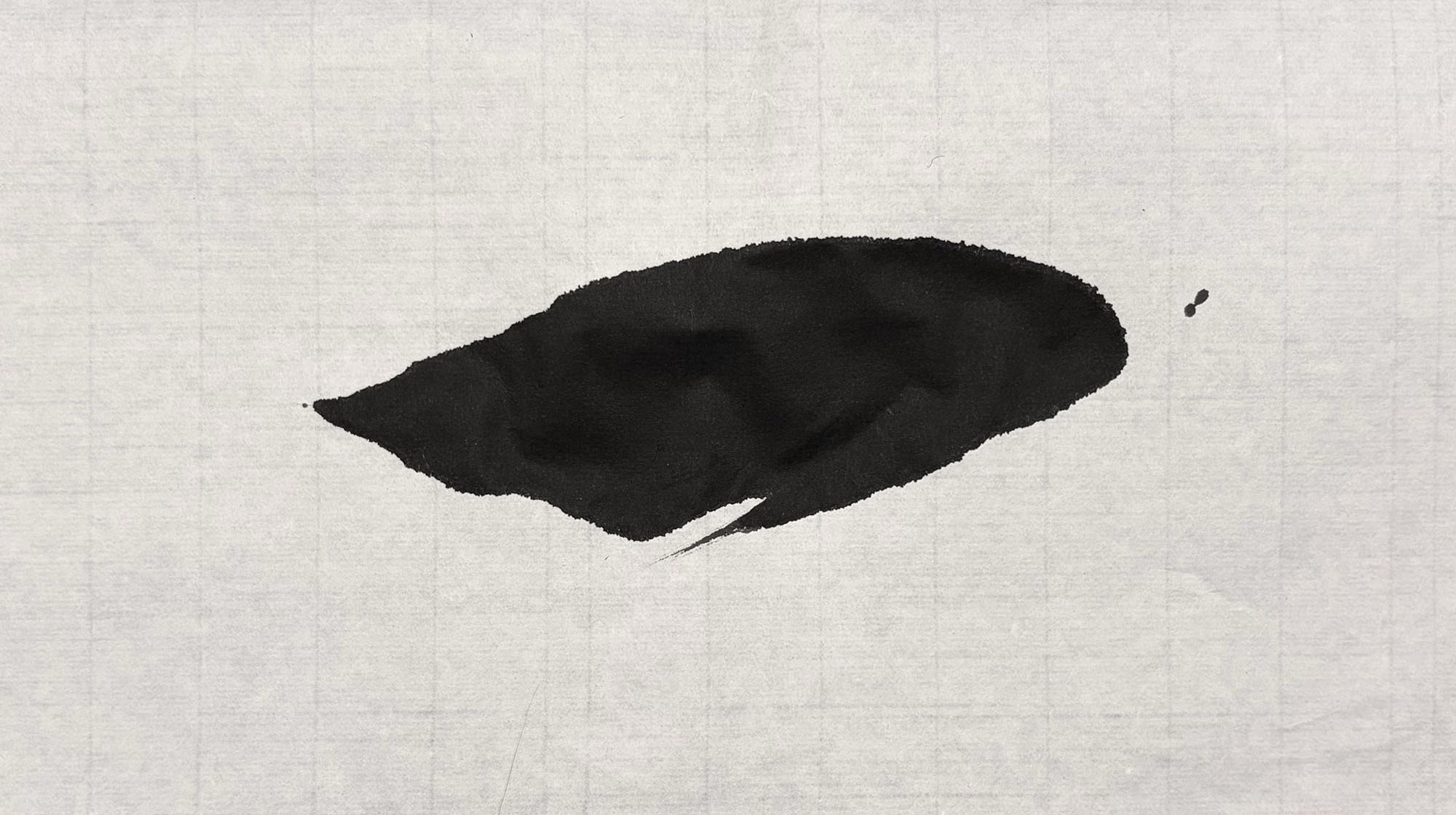
This is where a translation alone stops being enough. The characters on a scroll are not there only to be read. The speed of the line, the density of the ink, where the brush enters the paper and where it leaves, the empty space left around the characters — these carry as much as the words. The same four characters, written by two people, produce two entirely different objects. Written by the same person on two different days, they still differ.
The writer's state shows in the stroke
Ink cannot be corrected. Move the brush quickly and the line breaks into dry streaks; hesitate and the ink pools. Whatever was happening in the writer's breath and arm stays on the paper. This is why, in a tea room, how a phrase is written has always mattered alongside what it says. You are looking at a trace of one occasion — which is, conveniently, the subject of the phrase itself.
If the distinction between the different Japanese ink traditions is unclear, sumi-e and suibokuga sets out the terms. For the brushwork foundations behind any of this, Sumi-e for Beginners is a practical starting point.
What It Shares With the Ensō
One breath, one circle — one meeting, once
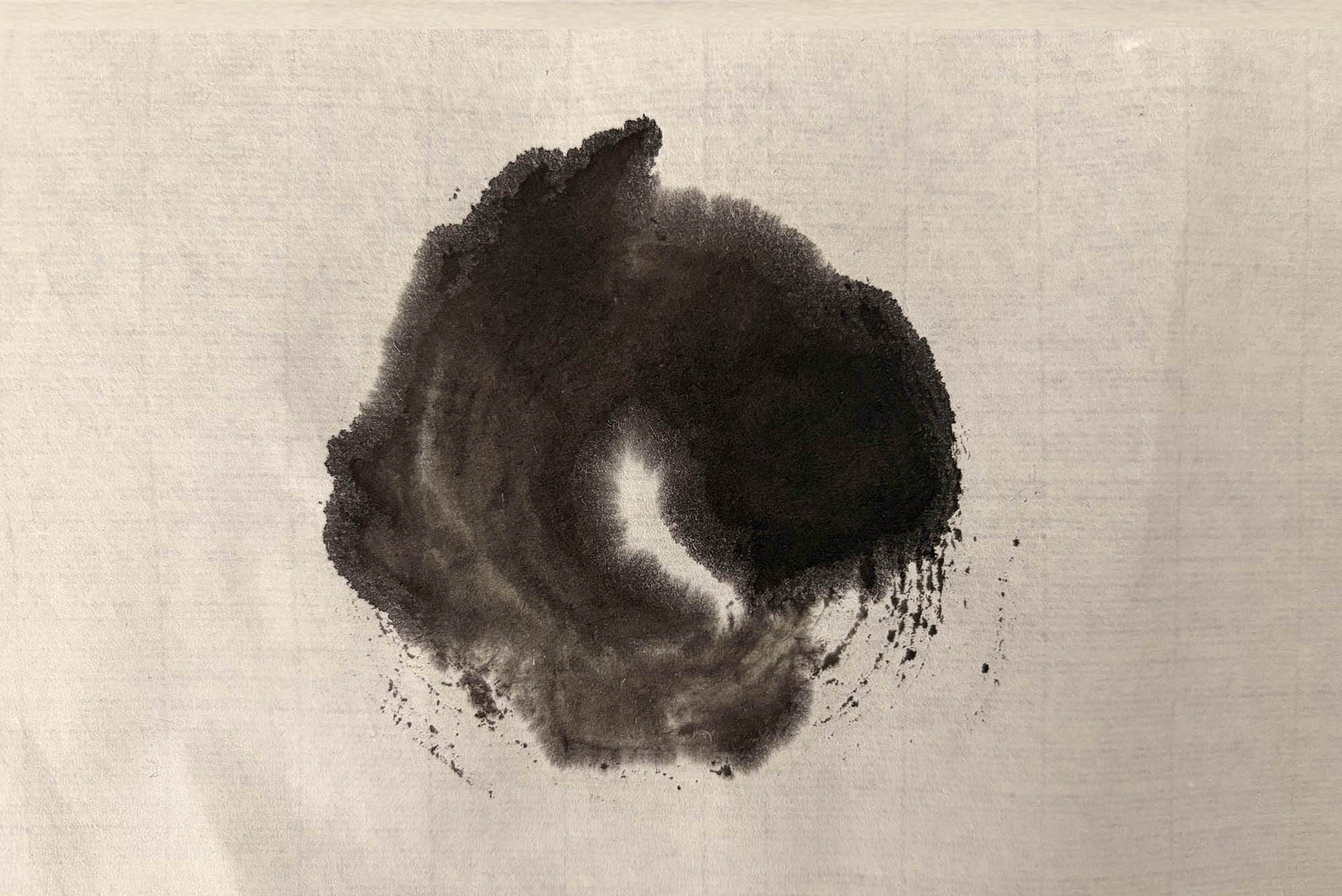
Zen brushwork has a subject called the ensō: a circle painted in a single stroke, in one breath, with no correction afterward. The ensō and ichigo ichie come from different places — one is an image, the other a phrase from tea — but they point at the same thing. Neither can be done twice.
Neither can be redone
An ensō fixes the painter's state at the moment the brush moved. Ichigo ichie says that when the gathering ends, that gathering is finished. In both cases the value is not in getting it perfect; it is in the fact that it happened once. You can read more in Ensō: the Zen circle. For subjects painted in ink rather than written, the Four Gentlemen covers the classic set.
Living With Ichigo Ichie
As a phrase to keep
Many people adopt ichigo ichie as a personal motto. It becomes easier to use if you take it as being aimed not at rare events but at ordinary repeating ones — the weekly meeting, the same walk, the person you will see again on Thursday. Strictly speaking, none of those repeat either.
A common misreading
In English the phrase often turns up as a farewell — a graceful way of saying goodbye. Its original sense sits earlier than that: it describes the attitude you hold while the meeting is still going on, not the sentence you say on the way out. Language shifts through use, and this is not worth policing, but knowing the original context makes the phrase more useful.
Zen calligraphy and tea utensils are held in museum collections worldwide. The Metropolitan Museum of Art's essay on Zen Buddhism is a good overview of how Zen and art intersect, and Japanese national museum holdings can be searched through ColBase.
Frequently Asked Questions
Q. What does ichigo ichie mean?
It describes a meeting that will never recur, and the attention that such a meeting deserves. The phrase comes from the Japanese way of tea. It does not mean you will never see the person again — it means this particular occasion, with this light and these people, happens only once.
Q. Where does the phrase ichigo ichie come from?
It is generally traced to Yamanoue Sōji ki, the record left by Yamanoue Sōji, a student of Sen no Rikyū, where the teaching appears as ichigo ni ichido no e. The tea practitioner and statesman Ii Naosuke is said to have developed the idea further in Chanoyu Ichie Shū. Accounts of the exact transmission differ.
Q. Is ichigo ichie a farewell phrase?
It is sometimes used that way, but originally it describes the attitude held during a meeting rather than something said at the end of one. Used while the occasion is still happening, it sits closer to its original sense.
Q. Is ichigo ichie Zen, or tea ceremony?
It comes from the way of tea and is deeply connected to Zen — the two sit close together, and Zen calligraphy has long been hung in tea rooms as chagake. One clarification worth making: ichigo ichie is a phrase, written as calligraphy. It is not a subject painted in sumi-e.
Q. How should I look at ichigo ichie written on a scroll?
Read the characters, then look at how they were made: the speed of the line, the density of the ink, where the brush entered and left the paper, and the empty space around the writing. Because ink cannot be corrected, the writer's state at that moment stays visible. It is the same way of looking that an ensō asks for.
Closing
Ichigo ichie can be explained in a single sentence. It has stayed in use for centuries anyway, which suggests the difficulty was never in understanding it — giving one ordinary occasion your full attention remains hard at any point in a life.
Standing in front of a scroll, you can read the four characters immediately. Seeing how they were written takes a little longer. That pause is probably closer to what the phrase was pointing at.
Jin is a sumi-e artist and calligrapher whose practice brings Western calligraphy into dialogue with the Japanese tradition of ink painting. In Jin's work, letterforms, brushed lines, and ma — the resonant negative space at the heart of sumi-e — come together in compositions that speak across cultures. This East–West synthesis grounds an ongoing exploration of artistic possibilities that reach beyond cultural boundaries. Jin currently serves as a Director of the International Association of SUMI, and was recently honored with the Special Jury Award — the Arisumi Mitamura Prize — at Art Beyond Boundaries. Rooted in tradition yet attentive to the present, Jin continues to share a contemporary vision of sumi-e with audiences around the world.