Ensō (円相): Meaning, Origins, and the Art of the Zen Ink Circle
Ensō (円相) is the zen circle of Japanese ink painting — one brushstroke that stands for completeness, emptiness and enlightenment. Its origins, Hakuin Ekaku's legacy, and how to paint one yourself.
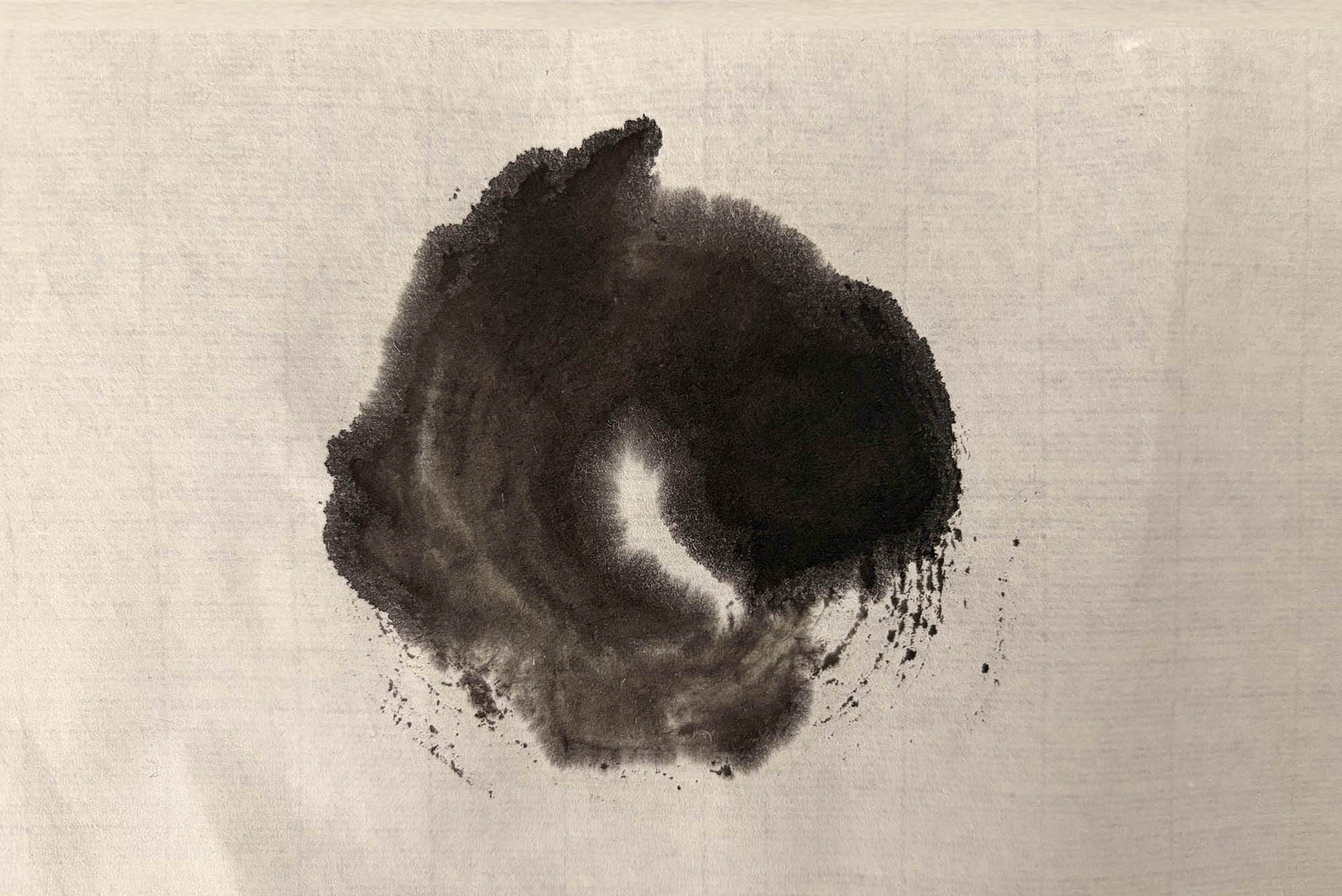
Ensō (円相) is a hand-painted circle in Japanese ink painting (sumi-e) that symbolizes completeness, the infinite, and the Zen concept of enlightenment.
Painted in a single, uninterrupted brushstroke, the ensō circle is at once a philosophical statement and a physical act — a meeting point between meditative practice and visual art. In this article you will learn:
- What ensō means and where the symbol comes from
- The role of Hakuin Ekaku and the Zen brushwork tradition
- How the ensō is painted — step by step
- The difference between an open and a closed ensō circle
- How to begin your own practice, whatever your level
The circle is never exactly the same twice, and that is precisely the point — the reason this site is named Ensō.
What Is Ensō? Definition and Core Meaning
Ensō as a single-brushstroke circle
An ensō is painted in one continuous stroke — typically with a large, fully loaded round brush on absorbent washi paper. The arm moves in a single arc; there is no going back to correct or refine. That irreversibility is not a constraint but the entire message: this moment, this breath, this mark.
What the circle represents in Zen Buddhism
The ensō carries several layers of meaning that coexist without contradiction:
- Completeness and wholeness — the circle encloses everything
- Imperfection and impermanence — no hand-drawn circle is geometrically perfect, and that imperfection is honored rather than hidden
- Infinity and the void — the circle has no beginning and no end; the space inside and outside are equally significant
- The state of mind of the painter — Zen tradition holds that an ensō is a self-portrait, revealing the painter's mental and spiritual condition at the moment of the stroke
Why the name "Ensō" was chosen for this site
The ensō circle became the name and emblem of this site because it captures everything we value about Japanese ink painting: the discipline of practice, the acceptance of imperfection, the meditative quality of a single mark made with full attention. Every article, every demonstration, every brushstroke we share is an attempt at that same honesty.
Historical Background
Origins in Zen Buddhism and Chan painting
The ensō's roots trace back to Chan Buddhism in Tang and Song dynasty China, where ink monochrome painting — shui-mo hua (水墨画) — became closely intertwined with meditative practice. When Zen (禅) took root in Japan, bringing with it the aesthetic principles of simplicity, restraint, and direct expression, the circle emerged as one of its most concentrated visual forms.
The ensō is not merely a subject to be painted. Within the Zen framework it functions as a kōan made visible — an image that resists intellectual analysis and points instead toward direct experience. For a fuller picture of how Chinese ink traditions traveled to and transformed within Japan, the history of Japanese ink painting and its Chinese origins offers useful context.
Hakuin Ekaku and the tradition of Zen ink circles
No figure is more closely associated with the ensō in the Japanese tradition than Hakuin Ekaku (白隠慧鶴, 1686–1769), the Rinzai Zen monk widely regarded as the revitalizer of Japanese Zen. Hakuin painted with deliberate roughness and expressive energy, using ensō and other brushwork images as teaching tools for his students. His circles — bold, asymmetric, vigorously alive — demonstrate that the ensō is a vehicle for transmission, not decoration.
Hakuin's works are held in major collections worldwide. The Metropolitan Museum of Art holds significant examples of Zen ink painting from this tradition, and the ColBase national integrated search provides access to Zen brushwork in Japanese national museum collections.
Ensō in major museum collections
The ensō appears across centuries of Japanese art, from Edo-period Zen monks to contemporary ink artists. Its persistence as a subject reflects its unique status: it is at once the simplest thing a brush can draw and among the most demanding in terms of the mental preparation it requires.
Ensō in Japanese Ink Painting (Sumi-e)
The ensō as the ultimate brushwork exercise
In sumi-e practice, the ensō is often introduced early — yet never truly mastered. A beginner can attempt it on the first day; a practitioner of forty years will still find something new in it. This quality of being simultaneously accessible and inexhaustible is part of what makes the ensō so central to the tradition.
The circle tests everything at once: ink load control, the smooth transfer of pressure from arm through wrist to brush tip, breath coordination, and the courage to commit to a mark that cannot be undone.
Meditative dimension: one breath, one stroke
In many Zen painting lineages, the ensō is painted on a single exhale. The breath and the stroke are not synchronized — they are the same event. This is what separates the ensō from a drawing exercise: the meditative intention transforms the physical act into something closer to seated meditation, where the outcome is secondary to the quality of attention brought to the practice.
This is why sumi-e more broadly, and the ensō in particular, resonates so strongly with practitioners of mindfulness and contemplative traditions outside Japan. The brush becomes an instrument for being present.
Variations: open circle vs. closed circle
An ensō can end with a gap — the brush lifting before completing the full arc — or with the stroke closing back onto itself. These are not aesthetic choices alone; each carries meaning:
- An open ensō suggests incompleteness, growth, space for possibility, and the dynamic quality of life in process
- A closed ensō suggests wholeness, fulfillment, and the fullness of this moment
Neither is more correct. Zen tradition holds that each circle reveals the painter's inner state at that particular moment — and that reading your own circles over time is itself a practice.
How to Paint an Ensō: Step-by-Step
Tools you need
At minimum:
- A round brush (medium to large, with a flexible tip that holds ink and releases it smoothly)
- Sumi ink — either ground from an ink stick (墨) on an ink stone (硯), or quality prepared liquid ink
- Absorbent washi or rice paper (the surface must allow the ink to spread slightly, revealing the brushstroke's texture)
- A felt mat or newspaper layer underneath to absorb excess moisture
For a complete list of recommended starting materials, see Best Sumi-e Supplies for Beginners.
Step 1 — Prepare your mind and breath
Before loading the brush, sit quietly for a moment. The ensō begins before the brush touches paper. Notice your posture, your breath, the position of your arm. There is no single prescribed ritual, but the intention to be fully present — rather than thinking about the outcome — is the foundation of the practice.
Step 2 — Load the brush with ink
Draw the brush through the prepared ink on the ink stone, working from tip to heel. The amount of ink matters: too little and the stroke will dry before completing the arc; too much and the circle may bleed beyond your intention. Neither outcome is a failure — it is information. Work the brush on a test sheet to feel how the ink releases, then let that knowledge inform but not over-control the stroke.
Step 3 — Paint the circle in a single stroke
Position the brush at roughly the top or left of where your circle will be. As you begin to exhale, move the arm — not just the wrist — in one continuous arc. The movement comes from the shoulder and elbow; the wrist follows. Do not slow down to correct. Do not stop. Lift the brush when the arc is complete, whether or not the ends meet.
Step 4 — Embrace imperfection: reading the circle you made
Set the brush down and look at what appeared. Notice the quality of the line — where it thickens, where it thins, where it dries into a texture of brushed fibers (かすれ, kasure, dry-brush). Notice whether the circle is open or closed, large or small, centered or drifting. This is your ensō. Paint several. They will all be different, and each is complete.
To continue developing your brushwork foundations, Sumi-e for Beginners is the natural next step.
Frequently Asked Questions (FAQ)
Q: What is the difference between an open and closed ensō?
An open ensō — where a gap remains between the two ends of the stroke — is generally interpreted as representing incompleteness, growth, and the space that exists within becoming. A closed ensō, where the stroke meets itself, symbolizes wholeness, completeness, and the fullness of this moment. Neither is more authentic or more advanced than the other. In the Zen tradition, each circle is understood as a reflection of the painter's state of mind at the precise moment it was made — and both openness and closure are valid expressions of that state.
Q: Is painting an ensō a form of meditation?
Yes — in the Zen tradition, the ensō is painted with complete mental presence, in a single stroke that allows no revision. The act of painting becomes the practice itself, much as seated meditation does. The finished circle is secondary; what matters is the quality of attention brought to the moment of the stroke. For practitioners of mindfulness or contemplative traditions outside formal Zen study, the ensō offers a concrete, accessible point of entry into meditative practice through mark-making.
Q: How do I learn to paint ensō properly?
There is no single correct ensō — the tradition values authentic expression over technical precision. That said, developing a feel for ink load, arm movement, and breath coordination will allow your circles to become more intentional over time. A good starting point is building general brushwork fundamentals through Sumi-e for Beginners, which covers the foundational techniques that inform every ensō stroke.
Q: What materials do I need to paint an ensō?
The essentials are straightforward:
- A round brush (medium to large)
- Sumi ink — from an ink stick and ink stone, or quality prepared liquid ink
- Absorbent washi or rice paper
Optional but helpful: a felt or cloth mat under the paper to absorb moisture, and a small ceramic or glass dish to hold additional ink. See Best Sumi-e Supplies for Beginners for specific recommendations on each item.
Q: Can beginners paint an ensō?
The ensō is one of the most welcoming subjects in all of sumi-e — not because it is effortless, but because there is no outcome to get wrong. A beginner's circle, painted with genuine presence and a willing arm, is as valid an ensō as one made by a practitioner of decades. The real challenge is not technical: it is the willingness to make a single, committed mark and then to look at it honestly. If you are new to sumi-e and wondering where to begin, Sumi-e for Beginners provides a practical foundation alongside the ensō practice.
Bringing It Together
The ensō circle is many things at once: a symbol, a practice, a philosophical statement, and a test of brushwork. It has endured across centuries of Zen tradition — from the Chan masters of Tang dynasty China to Hakuin Ekaku's vigorously imperfect circles in Edo-period Japan to the ink artists working today — precisely because it asks something genuine of every person who picks up a brush to paint it.
This site is named Ensō for the same reason. Every mark made with full attention is enough. We hope this article gives you a clear sense of what the ensō is and the invitation it extends — and that you feel ready to try one yourself.
日本語版もあります:円相(えんそう)とは|意味・象徴と、ひと筆で描く方法 — Japanese version of this article.
The same core — a single occasion that will never recur — runs through ichigo ichie, the phrase that came out of the Japanese way of tea.
RelatedArticle

How to Paint a Sumi-e Landscape: Near, Middle and Far Distance in Ink

How to Paint Chrysanthemums in Sumi-e: Layered Petals, Leaves & Small Flowers
Hokusai's Daily Exorcisms: The Lions He Painted Almost Every Morning in His Eighties
Jin is a sumi-e artist and calligrapher whose practice brings Western calligraphy into dialogue with the Japanese tradition of ink painting. In Jin's work, letterforms, brushed lines, and ma — the resonant negative space at the heart of sumi-e — come together in compositions that speak across cultures. This East–West synthesis grounds an ongoing exploration of artistic possibilities that reach beyond cultural boundaries. Jin currently serves as a Director of the International Association of SUMI, and was recently honored with the Special Jury Award — the Arisumi Mitamura Prize — at Art Beyond Boundaries. Rooted in tradition yet attentive to the present, Jin continues to share a contemporary vision of sumi-e with audiences around the world.