---
title: "The Four Gentlemen of Ink Painting: Plum, Orchid, Bamboo & Chrysanthemum"
description: The Four Gentlemen are plum, orchid, bamboo and chrysanthemum, classic sumi-e subjects that stand for a gentleman's virtues. Learn their meaning, symbolism and why beginners study them.
image: https://www.sumieart.art/hubfs/%E8%98%AD.jpg
---
[Ensō円 相](https://www.sumieart.art/en/blog?hsLang=en)
[Article](https://www.sumieart.art/en/blog?hsLang=en) [About](https://www.sumieart.art/en/about?hsLang=en)
[JA](https://www.sumieart.art/blog/four-gentlemen-sumi-e) / [EN](https://www.sumieart.art/en/blog/four-gentlemen-sumi-e)
[Article](https://www.sumieart.art/en/blog) — Suiboku
# The Four Gentlemen of Ink Painting: Plum, Orchid, Bamboo & Chrysanthemum
The Four Gentlemen are plum, orchid, bamboo and chrysanthemum, classic sumi-e subjects that stand for a gentleman's virtues. Learn their meaning, symbolism and why beginners study them.
2026.07.04
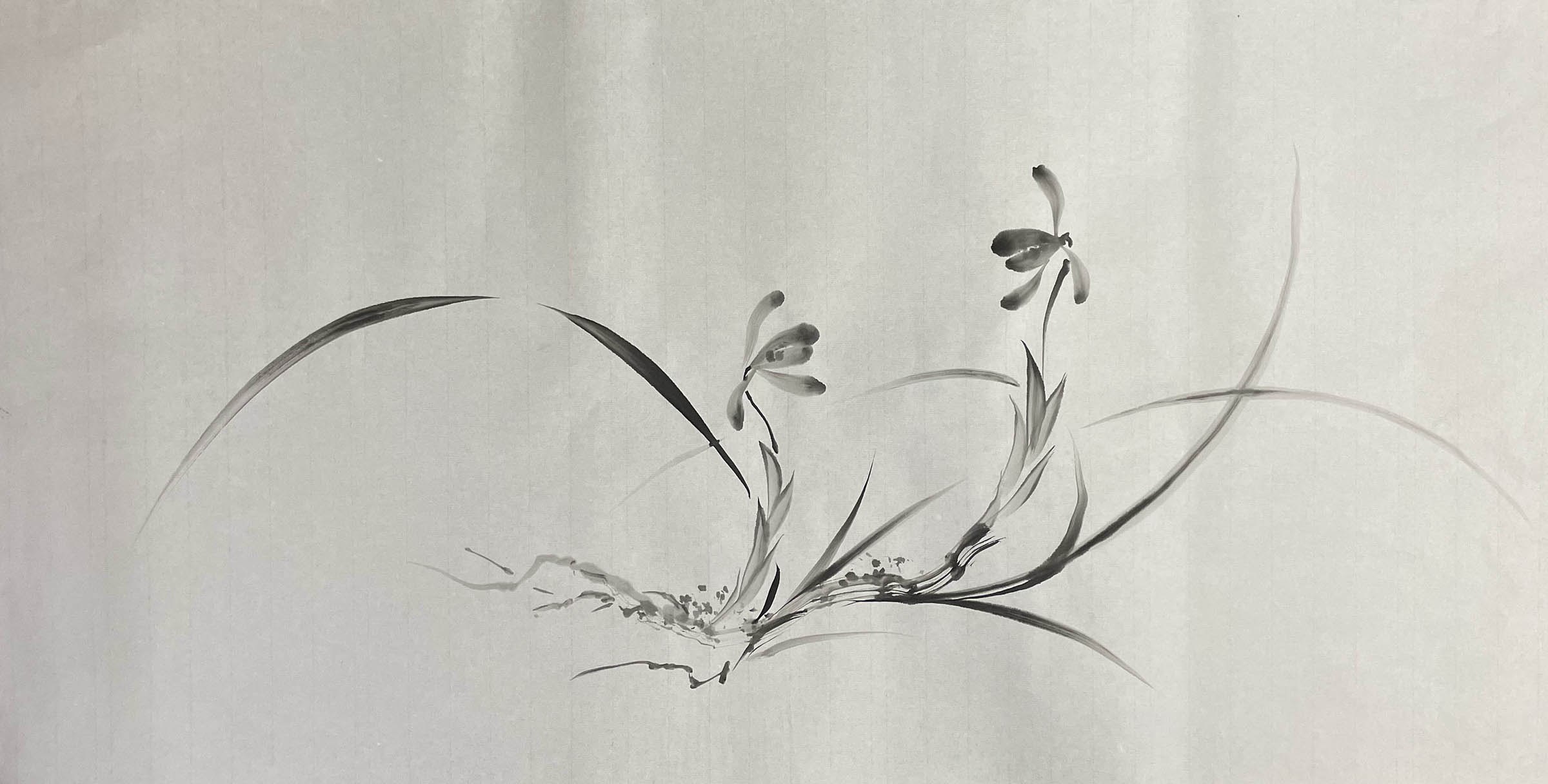
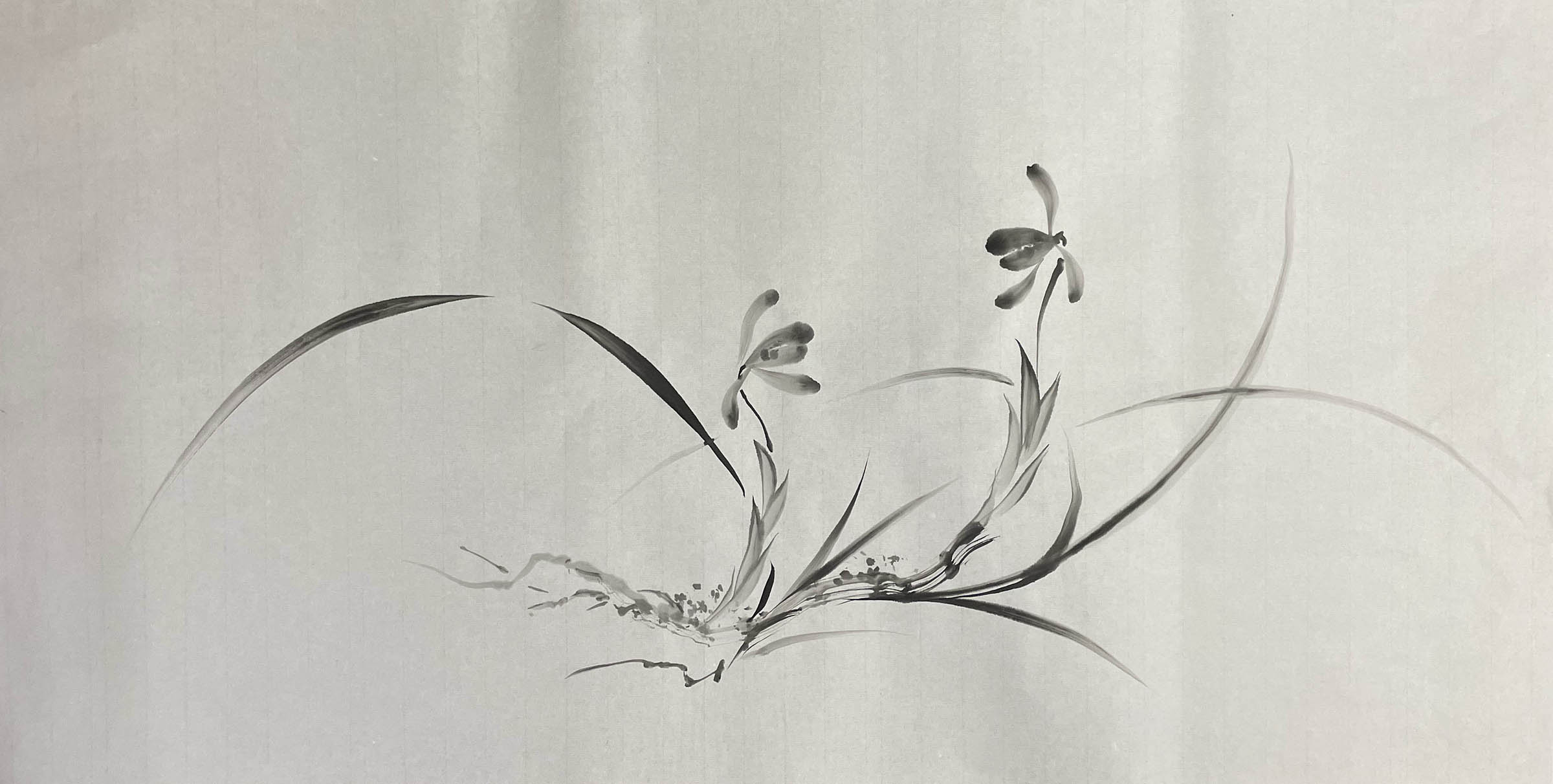
An orchid in sumi-e: long leaves crossing in single strokes, with pale-ink flowers and dark centres
The Four Gentlemen are four plants painted again and again in East Asian ink painting: plum, orchid, bamboo and chrysanthemum. Each is felt to share a quality with a "gentleman" — a person of virtue and character — and together they have been favourite subjects of painters and poets for centuries. In sumi-e (Japanese ink painting), they are among the most classic motifs, and they are often the first subjects a beginner learns.
This article explains what the Four Gentlemen are, why these four plants were chosen, the symbolism and the things to look for in each, and why studying them makes such good sense as brush practice.
The sumi-e artist Jin (Shin-un) explains how to read the Four Gentlemen, and in the plum, orchid and bamboo sections the sumi-e artist Tohun Kobayashi demonstrates the brushwork on video.
## In short: the Four Gentlemen are plum, orchid, bamboo and chrysanthemum
The Four Gentlemen (shikunshi in Japanese) is a name for four plants taken together: plum, orchid, bamboo and chrysanthemum. What links them is not only their beauty, but the way each one keeps its character under difficult conditions — a quality long associated with an ideal person.
### Why they are called the Four Gentlemen
A "gentleman" here means the East Asian ideal of a person of virtue, learning and integrity. The plum that blooms in the cold, the orchid that gives its scent in a hidden valley, the bamboo that bends in the wind without breaking, the chrysanthemum that flowers as the year fades — each holds its nature through hardship or change. Painted as a set, the four also map onto the turning of the seasons and the state of mind suited to each.
### Chinese origin and reception in Japan
The Four Gentlemen as a theme has its roots in China, where it grew within the tradition of literati painting. It suited the spirit of ink painting — capturing the essence of a subject through tones of black ink alone — and became established as a subject from the Song dynasty onward. The theme then travelled to Japan, where it was received and developed in its own way and has been painted ever since. Keeping in mind both its Chinese source and its independent growth in Japan gives the subject its full depth.
## Plum: integrity in the cold
### Symbolism and season
The plum blossoms in early spring while it is still cold, opening before other flowers. Blooming first in harsh conditions, it came to stand for an integrity that does not yield to hardship. Among the Four Gentlemen, the plum marks the start of spring.
### What to look for
The pleasure of a plum painting is the contrast between the strength of the gnarled old branches and the small blossoms set upon them like points. Branches are drawn in dark ink with dry-brush texture (kasure, the scrape of a dry brush), while the blossoms are placed lightly in pale ink or thin outline. Hardness and softness meet on one sheet.
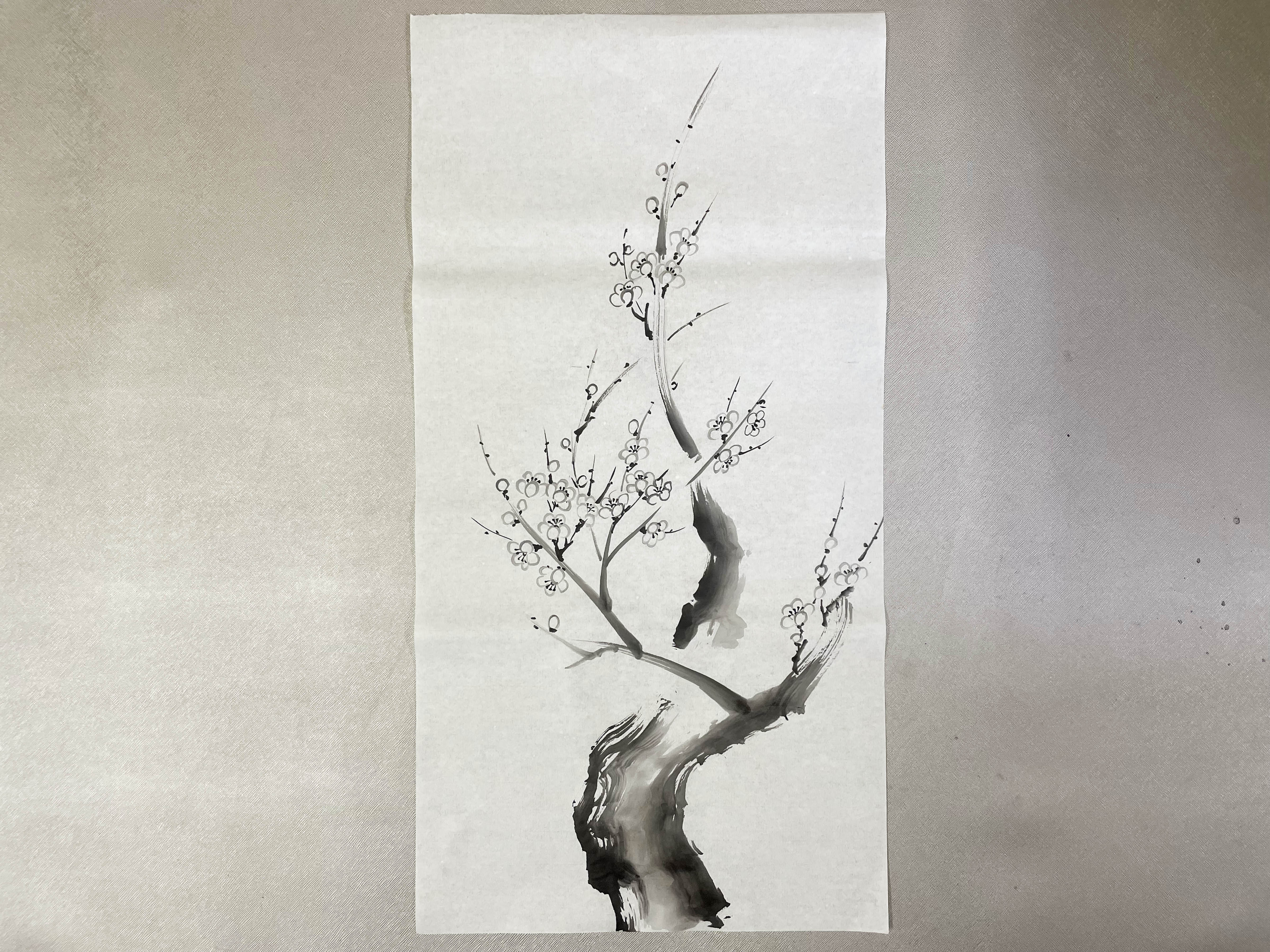
(Plum — a sumi-e demonstration work)
Watch the sumi-e artist Tohun Kobayashi paint the plum in sumi-e:
## Orchid: quiet grace
### Symbolism and season
The orchid gives its fragrance quietly, often in a secluded valley where few will see it. Keeping its grace without seeking to be admired, it was likened to the modest yet steadfast virtue of a gentleman. It carries the supple feeling of spring into early summer.
### The single-stroke leaf
In the orchid, the slender leaves matter more than the flower. A single leaf is drawn in one continuous stroke, from the moment the brush touches down to the moment it lifts away. That brushwork (unpitsu, the movement of the brush) shows your control of pressure and speed directly, which is why the orchid is so often recommended as practice. You can follow the full method in our published guide, [how to paint orchid](https://www.sumieart.art/en/blog/how-to-paint-orchid-sumi-e).

(Orchid — a sumi-e demonstration work)
Watch the sumi-e artist Tohun Kobayashi paint the orchid in sumi-e:
## Bamboo: upright resolve
### Symbolism and season
Bamboo grows straight, yet bends in the wind and springs back without breaking. Holding its core even when pushed, it was linked to a gentleman's steadfast resolve. Green bamboo also carries a sense of summer freshness.
### Nodes and stalk
The thing to watch in bamboo is the clean run of the stalk and the rhythm of the nodes that divide it. The stalk is drawn in one decisive movement for momentum, and each node is closed with a short stroke. Leaves are set in a few directions to suggest the path of the wind. You can follow the full method in our published guide, [how to paint bamboo](https://www.sumieart.art/en/blog/how-to-paint-bamboo-sumi-e-1).
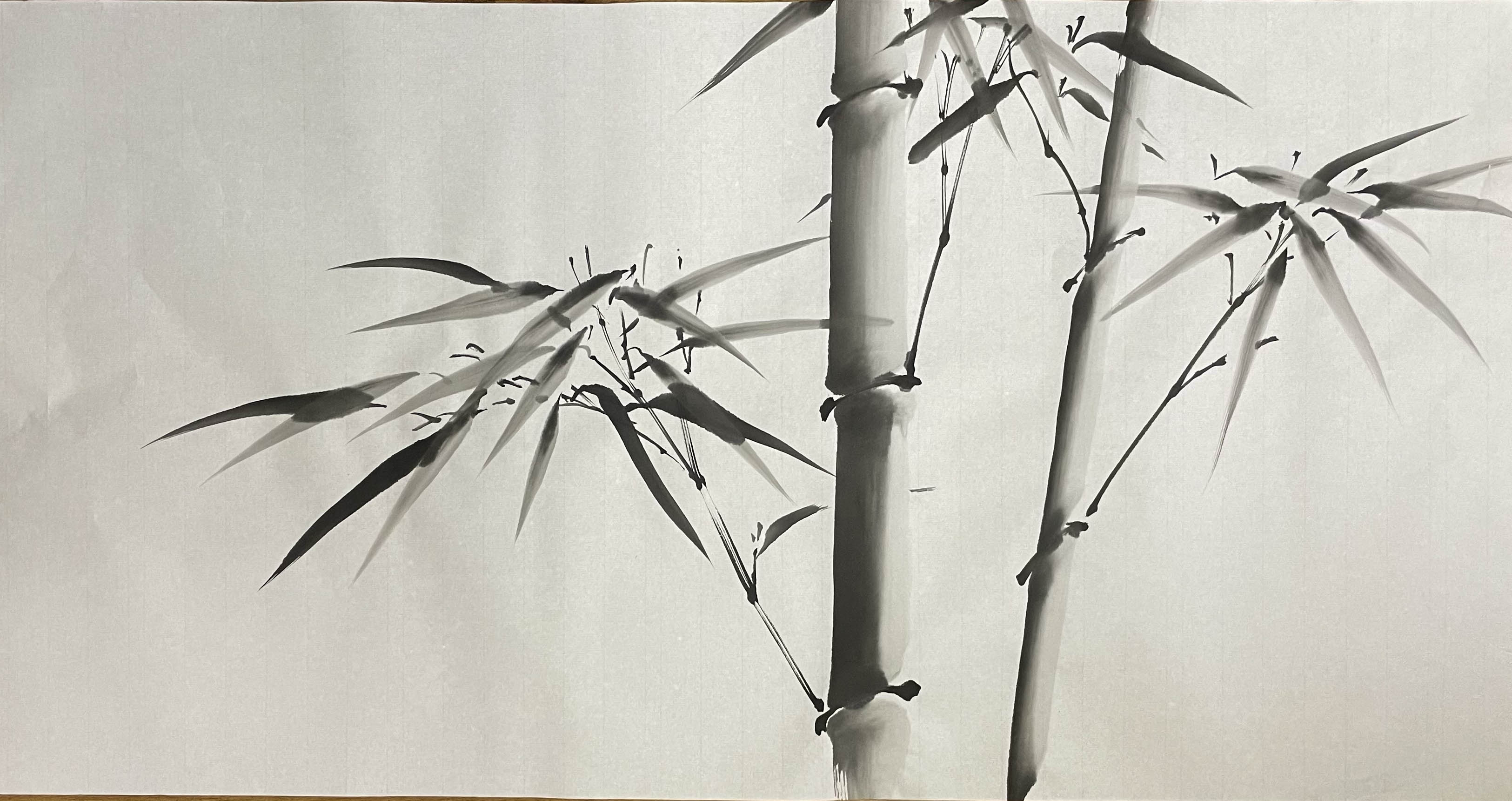
(Bamboo — a sumi-e demonstration work)
Watch the sumi-e artist Tohun Kobayashi paint the bamboo in sumi-e:
## Chrysanthemum: dignity in late season
### Symbolism and season
The chrysanthemum flowers as autumn ends, when most other blooms are gone. Flowering without disorder even as the cold approaches, it came to stand for the dignity that holds with age — a kind of late-season grace. Among the four, it carries autumn.
### Layered petals
The interest in a chrysanthemum is the depth of its layered petals. As you build petals from the centre outward, varying the ink tones — dark, medium and light — creates a sense of volume within a flat surface.
## Why learners study the Four Gentlemen
### They cover the core brushstrokes
The Four Gentlemen are more than a set of classic subjects. The plum teaches the hardness of branches and dry-brush texture; the orchid, the long single stroke; the bamboo, the decisive stalk and the closing stop; the chrysanthemum, layered petals through ink gradation. Worked through as a group, they take you once through the core brushwork of ink painting. The [ensō](https://www.sumieart.art/en/blog/enso-zen-circle-meaning-japanese-ink-painting), the Zen circle drawn in a single breath, strips that idea down to one stroke and nothing else. That is why they have long been chosen for beginners.
### A gateway to the how-to lessons
To "know" the Four Gentlemen is a natural gateway to "painting" them. When you understand each plant's symbolism and character before picking up the brush, you aim to express what the plant is, rather than merely copy it. Where a lesson is already available — as with bamboo above — the steps continue there. Note that the Four Gentlemen are subjects of sumi-e — ink painting in tones of black — and are distinct from calligraphy (the art of written characters) and from nihonga (which uses mineral pigments). If the terms interest you, see [sumi-e vs suibokuga](https://www.sumieart.art/en/blog/suiboku-vs-sumie).
You can also see real examples in public collections such as [The Metropolitan Museum of Art](https://www.metmuseum.org/) and [The British Museum](https://www.britishmuseum.org/).
## Frequently asked questions
### What are the Four Gentlemen in ink painting?
The Four Gentlemen are four plants taken together — plum, orchid, bamboo and chrysanthemum. Each is likened to the virtues of a gentleman, and they have been favourite subjects in East Asian painting and poetry for centuries. In sumi-e they are especially classic motifs.
### Why are these four plants called the Four Gentlemen?
The plum that blooms in the cold suggests integrity; the hidden, fragrant orchid suggests grace; the bamboo that bends without breaking suggests resolve; the late-blooming chrysanthemum suggests dignity. Together they span the seasons, and their roots in China with later development in Japan give the set its lasting meaning.
### What is the difference between sumi-e, calligraphy and nihonga?
The Four Gentlemen are subjects you paint. Sumi-e is the style itself — painting in tones of black ink. Calligraphy is the art of written characters, and nihonga is a style using mineral pigments. The plants are subjects; sumi-e is the manner of painting them, and the three should not be confused.
### Which of the Four Gentlemen should a beginner start with?
There is no single correct order, but for ease of brushwork many learners begin with bamboo or orchid. Starting with the orchid's long single stroke and the bamboo's momentum-and-stop, then moving to the plum's branches and the chrysanthemum's layered tones, lets you widen your range without strain.
### Do I need color to paint the Four Gentlemen?
No. They are traditionally painted in ink tones alone — dark, medium and light. Working without colour is part of their character, and the gradation of black ink is enough to suggest the form and feeling of each plant.
Jin
Sumi-e Artist
Jin is a sumi-e artist and calligrapher whose practice brings Western calligraphy into dialogue with the Japanese tradition of ink painting. In Jin's work, letterforms, brushed lines, and ma — the resonant negative space at the heart of sumi-e — come together in compositions that speak across cultures. This East–West synthesis grounds an ongoing exploration of artistic possibilities that reach beyond cultural boundaries. Jin currently serves as a Director of the International Association of SUMI, and was recently honored with the Special Jury Award — the Arisumi Mitamura Prize — at Art Beyond Boundaries. Rooted in tradition yet attentive to the present, Jin continues to share a contemporary vision of sumi-e with audiences around the world.
## RelatedArticle
### [ Suiboku / Japanese Art / Sumie Itō Jakuchū's Vegetable Nirvana: Why the Buddha Is a Radish](https://www.sumieart.art/en/blog/ito-jakuchu-vegetable-nirvana)
### [ Suiboku / Japanese Art / Sumie How to Paint Orchid in Sumi-e: Leaves, Crossings, Flowers & Composition](https://www.sumieart.art/en/blog/how-to-paint-orchid-sumi-e)
### [ Suiboku / Sumie Ichigo Ichie Meaning, Origins, and the Zen Phrase on a Tea Room Scroll](https://www.sumieart.art/en/blog/ichigo-ichie-meaning-japanese-phrase)
### [ How to Practise Sumi-e Brushwork: 5 Fundamental Drills](https://www.sumieart.art/en/blog/sumi-e-brushwork-practice-drills)
Ensō
A bilingual platform dedicated to the aesthetic sensibility of Japan through the art of ink painting.
[Article](https://www.sumieart.art/en/blog?hsLang=en)
[About](https://www.sumieart.art/en/about?hsLang=en)
```json
{
"@context" : "https://schema.org",
"@type" : "BlogPosting",
"author" : {
"@type" : "Person",
"name" : "Jin",
"url" : "https://www.sumieart.art/en/blog/author/jin-e"
},
"dateModified" : "2026-07-04T14:57:21.356Z",
"datePublished" : "2026-07-04T14:57:21.000Z",
"headline" : "The Four Gentlemen of Ink Painting: Plum, Orchid, Bamboo & Chrysanthemum",
"image" : [ "https://www.sumieart.art/hubfs/%E8%98%AD.jpg" ],
"mainEntityOfPage" : {
"@id" : "https://www.sumieart.art/en/blog/four-gentlemen-sumi-e",
"@type" : "WebPage"
},
"publisher" : {
"@type" : "Organization",
"logo" : {
"@type" : "ImageObject"
}
}
}
```
```json
{
"@context" : "https://schema.org",
"@type" : "Article",
"author" : {
"@type" : "Person",
"name" : "Jin (Shin-un)"
},
"datePublished" : "2026-07-04T00:00:00+09:00",
"description" : "The Four Gentlemen are plum, orchid, bamboo and chrysanthemum, classic sumi-e subjects standing for a gentleman's virtues. Their meaning, symbolism and value as brush practice.",
"headline" : "The Four Gentlemen of Ink Painting: Plum, Orchid, Bamboo & Chrysanthemum",
"image" : "https://246015485.fs1.hubspotusercontent-na2.net/hubfs/246015485/%E7%AB%B9-%E3%82%B5%E3%83%A0%E3%83%8D%E3%82%A4%E3%83%AB.jpg",
"inLanguage" : "en",
"mainEntityOfPage" : "https://www.sumieart.art/en/blog/four-gentlemen-sumi-e",
"publisher" : {
"@type" : "Organization",
"name" : "Ensō",
"url" : "https://www.sumieart.art"
}
}
```
```json
{
"@context" : "https://schema.org",
"@type" : "FAQPage",
"mainEntity" : [ {
"@type" : "Question",
"acceptedAnswer" : {
"@type" : "Answer",
"text" : "The Four Gentlemen are four plants taken together: plum, orchid, bamboo and chrysanthemum. Each is likened to the virtues of a gentleman, and they have been favourite subjects in East Asian painting and poetry for centuries. In sumi-e they are especially classic motifs."
},
"name" : "What are the Four Gentlemen in ink painting?"
}, {
"@type" : "Question",
"acceptedAnswer" : {
"@type" : "Answer",
"text" : "The plum that blooms in the cold suggests integrity; the hidden, fragrant orchid suggests grace; the bamboo that bends without breaking suggests resolve; the late-blooming chrysanthemum suggests dignity. Together they span the seasons, and their roots in China with later development in Japan give the set its lasting meaning."
},
"name" : "Why are these four plants called the Four Gentlemen?"
}, {
"@type" : "Question",
"acceptedAnswer" : {
"@type" : "Answer",
"text" : "The Four Gentlemen are subjects you paint. Sumi-e is the style itself, painting in tones of black ink. Calligraphy is the art of written characters, and nihonga is a style using mineral pigments. The plants are subjects; sumi-e is the manner of painting them, and the three should not be confused."
},
"name" : "What is the difference between sumi-e, calligraphy and nihonga?"
}, {
"@type" : "Question",
"acceptedAnswer" : {
"@type" : "Answer",
"text" : "There is no single correct order, but for ease of brushwork many learners begin with bamboo or orchid. Starting with the orchid's long single stroke and the bamboo's momentum-and-stop, then moving to the plum's branches and the chrysanthemum's layered tones, lets you widen your range without strain."
},
"name" : "Which of the Four Gentlemen should a beginner start with?"
}, {
"@type" : "Question",
"acceptedAnswer" : {
"@type" : "Answer",
"text" : "No. They are traditionally painted in ink tones alone: dark, medium and light. Working without colour is part of their character, and the gradation of black ink is enough to suggest the form and feeling of each plant."
},
"name" : "Do I need color to paint the Four Gentlemen?"
} ]
}
```
```json
{
"@context" : "https://schema.org",
"@type" : "VideoObject",
"contentUrl" : "https://www.youtube.com/watch?v=IfV1TkQ4C4Y",
"description" : "A demonstration of painting a plum (ume) in sumi-e: the brushwork of the branch and the dotting of the blossoms.",
"duration" : "PT2M17S",
"embedUrl" : "https://www.youtube.com/embed/IfV1TkQ4C4Y",
"name" : "小林東雲が水墨画で描く梅 / Japanese apricot (plum) in Japanese ink painting by Tohun Kobayashi",
"thumbnailUrl" : "https://img.youtube.com/vi/IfV1TkQ4C4Y/hqdefault.jpg",
"uploadDate" : "2023-08-16T08:00:13-07:00"
}
```
```json
{
"@context" : "https://schema.org",
"@type" : "VideoObject",
"contentUrl" : "https://www.youtube.com/watch?v=S4P38KTglmo",
"description" : "A demonstration of painting an orchid (ran) in sumi-e: the single continuous stroke of the leaf.",
"duration" : "PT1M40S",
"embedUrl" : "https://www.youtube.com/embed/S4P38KTglmo",
"name" : "小林東雲が水墨画で描く蘭 / How to paint Orchid in Japanese ink painting by Tohun Kobayashi",
"thumbnailUrl" : "https://img.youtube.com/vi/S4P38KTglmo/hqdefault.jpg",
"uploadDate" : "2023-08-14T08:42:50-07:00"
}
```
```json
{
"@context" : "https://schema.org",
"@type" : "VideoObject",
"contentUrl" : "https://www.youtube.com/watch?v=DKXXLRWPVOg",
"description" : "A demonstration of painting bamboo (take) in sumi-e: the single decisive stroke of the stalk and the placing of the leaves.",
"duration" : "PT1M40S",
"embedUrl" : "https://www.youtube.com/embed/DKXXLRWPVOg",
"name" : "小林東雲 水墨画での竹の描き方 / How to Paint Bamboo in Sumi-e by Tohun Kobayashi",
"thumbnailUrl" : "https://img.youtube.com/vi/DKXXLRWPVOg/hqdefault.jpg",
"uploadDate" : "2023-11-04T15:00:04-07:00"
}
```